
AFROCENTRIC NEWS PORTAL
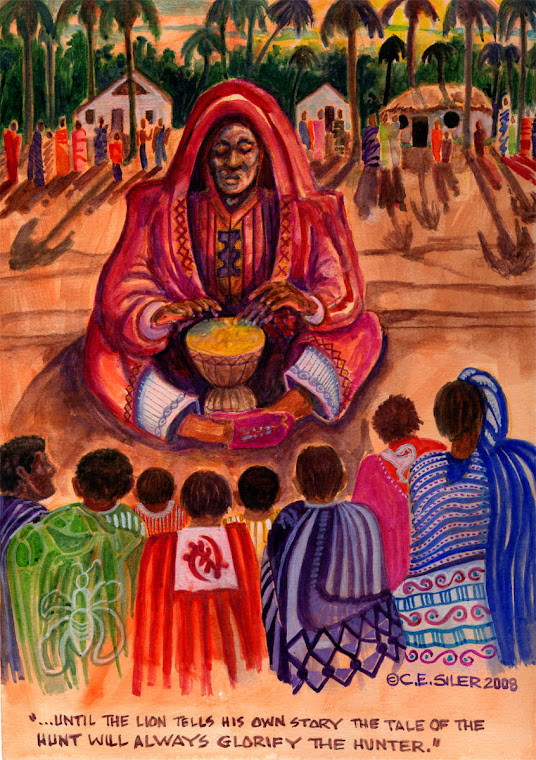
Until the Lion tells His Own story, the tale of the Hunt will Always Glorify the Hunter.
Saturday, February 8, 2014
BLACK HISTORY MONTH
This February every year, begins a new segment of our pride and learning of our history.
Although we as a people have had our precious memory taken from us, we should be concern 24/7. Each and everyday we really should learn as much as we can and pass this information on to our children. This site will engage a part of our history, which is not just "Black History" but "World History" from as far as we can find and present it to you. In order to re-build and our notes and our hearts and give honor due to our ancestors memory.
To Note: This site just doesn't want you to know about the civil rights area but a time before slavery, we will try to focus more in inventions and a time way before our people crossed the Atlantic. A time where the first mathematicians and science flowed freely. Be proud and always hold your head up, because you came from a great people that created much. A rich history that claim so much more than the slavery of Black people.
On 2/8 1908 *Cornelius Adolphus ”C.A.” Scott was born. He was an African American newspaper publisher.
For 63 years, he worked for the countries oldest and first successful Black daily newspaper. Even through the fear of being lynched, and Jim Crow laws and segregation, as well as police brutality, even less opportunity in housing and jobs for for the Black communities at large. These are the things Blacks had to worry about in order to put food on the table and to support their families.
This strong brother also contributed in the selection of Atlanta’s first African-American police officers. Many first begin to happen as a result of people like Scott. There was also a campaign in the 1940's to increase the pa Black teachers pay, who were paid about half as much as white teachers. During the 1950s and 1960s, This newspaper waged and filled its pages with information about court cases and lawsuits filed to desegregate public facilities.
--------------------------Read more about this article in the African-American Registry.
--------------------------
Reference:
Mississippi Department of Archives and History
Elbert R. Hilliard, director
Chrissy Wilson, editor
MHN, P.O. Box 571,
Jackson, MS 39205
Thursday, May 12, 2011
CONGO; THE RAPE OF WOMEN AS A WEAPON OF WAR
Shocking! 48 Women Raped Every Hour In Congo, 1,152 Per Day
Women in Congo
=================
CONGO– An estimated 1,152 women are raped every day, or 48 per hour, in Congo according to a study to appear in the American Journal of Public Health.

In one particularly war-ravaged part of the country, 67 out of every 1,000 women have been raped at least once. By comparison, the annual rate in the US is 0.5 per 1,000.
“The message is important and clear: Rape in (Congo) has metastasized amid a climate of impunity, and has emerged as one of the great human crises of our time,” says the director of the Harvard Humanitarian Initiative.
Study authors relied on figures from a government health survey and pooled data from across the country to conclude that 29 Congolese women out of every 1,000 were raped.
Congo has been called the worst place on earth to be a woman, and it is tragically living up to its reputation. The Hague to declare rape a weapon of war. During 15 years of war, hundreds of thousands of women and girls have been raped and tortured in the Congo.

Rising Rape In Congo Unveils U.N’s Weakness
===========================================
Four armed men barged into Anna Mburano’s hut, slapped the children and threw them down. They flipped Mrs. Mburano on her back, she said, and raped her, repeatedly.
It did not matter that dozens of United Nations peacekeepers were based just up the road. Or that Mrs. Mburano is around 80 years old.
“Grandsons!” she yelled. “Get off me!”
======================================
The mineral coltan mined in the Democratic Republic of the Congo is used in the production of cell phones, laptop computers and digital cameras, but has also been cited as fueling conflicts in the Congo that have killed an estimated 5.4 million people since 1998.
“Somehow we’ve been desensitized to Black Africa,”. “We see it as their fault because we don’t see our part in it.”
“A million people in displaced camps. Can you even imagine that?”
“When you go through an event like that, you say, ‘What is my life worth?’” “Certainly not to gain material things.”
“I believe we are all one. We’re all connected,”. “If somebody is suffering in the Congo and I have everything that I need — people are only happy when they share.
STORY REF: NEWS ONE
Women in Congo
=================
CONGO– An estimated 1,152 women are raped every day, or 48 per hour, in Congo according to a study to appear in the American Journal of Public Health.

In one particularly war-ravaged part of the country, 67 out of every 1,000 women have been raped at least once. By comparison, the annual rate in the US is 0.5 per 1,000.
“The message is important and clear: Rape in (Congo) has metastasized amid a climate of impunity, and has emerged as one of the great human crises of our time,” says the director of the Harvard Humanitarian Initiative.
Study authors relied on figures from a government health survey and pooled data from across the country to conclude that 29 Congolese women out of every 1,000 were raped.
Congo has been called the worst place on earth to be a woman, and it is tragically living up to its reputation. The Hague to declare rape a weapon of war. During 15 years of war, hundreds of thousands of women and girls have been raped and tortured in the Congo.

Rising Rape In Congo Unveils U.N’s Weakness
===========================================
Four armed men barged into Anna Mburano’s hut, slapped the children and threw them down. They flipped Mrs. Mburano on her back, she said, and raped her, repeatedly.
It did not matter that dozens of United Nations peacekeepers were based just up the road. Or that Mrs. Mburano is around 80 years old.
“Grandsons!” she yelled. “Get off me!”
======================================
The mineral coltan mined in the Democratic Republic of the Congo is used in the production of cell phones, laptop computers and digital cameras, but has also been cited as fueling conflicts in the Congo that have killed an estimated 5.4 million people since 1998.
“Somehow we’ve been desensitized to Black Africa,”. “We see it as their fault because we don’t see our part in it.”
“A million people in displaced camps. Can you even imagine that?”
“When you go through an event like that, you say, ‘What is my life worth?’” “Certainly not to gain material things.”
“I believe we are all one. We’re all connected,”. “If somebody is suffering in the Congo and I have everything that I need — people are only happy when they share.
STORY REF: NEWS ONE
Tuesday, May 3, 2011
A HUGH POSITIVE FOR OUR COMMANDER AND CHIEF OBAMA

So many New Yorkers were murdered on September 11, there is a sigh of relief in the air. Many people all over the world were overjoyed!
I have witnessed Obama constantly having to prove himself over and over again.
It also really is "the single most important success the United States has had in its war against al Qaeda."
Hats off to our nation President Barack Obama! His descision helped
America looks strong again: Bin Laden's death "matters because the U.S. put a marker down,"
“He looks stronger than he has on any other issue.” A Democratic Insider echoed that this is a “huge positive for him as commander in chief: the more details come out the better he and his national security team look.” Another Democratic Insider noted: “One of the main criticisms [of Obama] is that when it comes to foreign policy, he is not strong enough and is an apologist to the world—this puts those arguments to bed.”
"Imagine the effort to go through Osama's laptop."
===========================
The Rasmussen Reports daily Presidential Tracking Poll for Monday shows that 25% of the nation's voters Strongly Approve of the way that Barack Obama is performing his role as president.
With the successful military strike, Insiders in both parties felt that Obama has been able to quell doubts about his conduct of foreign policy and burnished his leadership image. “For once the President has shown he can lead and get results,” said one Republican Insider.
============================
Thirty-seven percent (37%) Strongly Disapprove, giving Obama a Presidential Approval Index rating of -12 (see trends).
Americans today are celebrating the news that Osama bin Laden is dead. The update on the president’s Job Approval ratings is based upon interviews completed before that news was released.
President Obama’s ratings have remained remarkably steady over the past 18 months through a whole series of major news events.

Sunday, October 3, 2010
S. Africa Groups Call for Economic Shift
September 16, 2010
African and Caribbean Influential South African political groups are demanding a leftward shift in the country's market-friendly policies — including nationalizing mines — which they say have left too many citizens jobless and poor.
In the lead-up to a policy review next week, the country's largest trade union group has called for a radical change in policy. The youth wing of the governing African National Congress is calling for mines to be nationalized. Mining of gold, platinum and coal is a pillar of South Africa's economy.
The South African Communist Party has called for a state-owned mining company, but not the complete nationalization supported by the ANC Youth League.
The ANC and its allies will meet next week in Durban for a trial run for building a platform for the next general elections in 2014. Business groups will be watching closely.
The party has won every election since the first multiracial vote in 1994 but relies on support from the trade union bloc and from the communist party. The ANC's youth wing is known for getting voters to the polls.
Analysts say the ruling party will feel pressure to bow to supporters' demands before the 2014 election.
The union bloc and the communist party — whose members sit on key ANC leadership bodies and in the ANC Cabinet — helped engineer the ascendance of President Jacob Zuma in acrimonious 2007 party elections.
Economist Zamikhaya Maseti said he expects "a radical ANC government to emerge after the party 2012 conference and beyond" because of pressure from the left. Others, though, expect the general free market trends to hold.
The Congress of South African Trade Unions asked for more state intervention in currency rates and redistribution of income. It also proposed the formation of a state bank.
The union bloc says Zuma isn't fulfilling pledges to create decent jobs — in the face of unemployment of at least 24 percent — and share the country's wealth equitably. It says the Zuma administration is too wedded to market-friendly policies.
"We are headed in the direction of a full-blown predator state, in which a powerful, corrupt and demagogic elite of political hyenas increasingly controls the state," the bloc, known as Cosatu, said in a statement. "The ANC-led government should focus on redistribution of income and power in favor of the working class."
Cosatu's general secretary, Zwelinzima Vavi, who recently led 1.3 million public service workers on a debilitating three-week wage strike, has hinted at a possible withdrawal of Cosatu's support for the ANC at the polls.
But political analyst Adam Habib, based at the University of Johannesburg, said he thinks the tensions ahead of Monday's conference are "mere skirmishes and not serious battles" between those who want to retain market policies and socialists.
He added that he thinks it unlikely that mines will be nationalized.
"The youth league doesn't have the power it thinks it has," he said.
Source: The Associated Press.
African and Caribbean Influential South African political groups are demanding a leftward shift in the country's market-friendly policies — including nationalizing mines — which they say have left too many citizens jobless and poor.
In the lead-up to a policy review next week, the country's largest trade union group has called for a radical change in policy. The youth wing of the governing African National Congress is calling for mines to be nationalized. Mining of gold, platinum and coal is a pillar of South Africa's economy.
The South African Communist Party has called for a state-owned mining company, but not the complete nationalization supported by the ANC Youth League.
The ANC and its allies will meet next week in Durban for a trial run for building a platform for the next general elections in 2014. Business groups will be watching closely.
The party has won every election since the first multiracial vote in 1994 but relies on support from the trade union bloc and from the communist party. The ANC's youth wing is known for getting voters to the polls.
Analysts say the ruling party will feel pressure to bow to supporters' demands before the 2014 election.
The union bloc and the communist party — whose members sit on key ANC leadership bodies and in the ANC Cabinet — helped engineer the ascendance of President Jacob Zuma in acrimonious 2007 party elections.
Economist Zamikhaya Maseti said he expects "a radical ANC government to emerge after the party 2012 conference and beyond" because of pressure from the left. Others, though, expect the general free market trends to hold.
The Congress of South African Trade Unions asked for more state intervention in currency rates and redistribution of income. It also proposed the formation of a state bank.
The union bloc says Zuma isn't fulfilling pledges to create decent jobs — in the face of unemployment of at least 24 percent — and share the country's wealth equitably. It says the Zuma administration is too wedded to market-friendly policies.
"We are headed in the direction of a full-blown predator state, in which a powerful, corrupt and demagogic elite of political hyenas increasingly controls the state," the bloc, known as Cosatu, said in a statement. "The ANC-led government should focus on redistribution of income and power in favor of the working class."
Cosatu's general secretary, Zwelinzima Vavi, who recently led 1.3 million public service workers on a debilitating three-week wage strike, has hinted at a possible withdrawal of Cosatu's support for the ANC at the polls.
But political analyst Adam Habib, based at the University of Johannesburg, said he thinks the tensions ahead of Monday's conference are "mere skirmishes and not serious battles" between those who want to retain market policies and socialists.
He added that he thinks it unlikely that mines will be nationalized.
"The youth league doesn't have the power it thinks it has," he said.
Source: The Associated Press.
Friday, August 6, 2010
Thornton: Tells 911 Of Racist Work Place
Omar Thornton, 34, The emergency call confirmed suggestions from his relatives and girlfriend that he believed he was avenging racist treatment in the workplace.
"You probably want to know the reason why I shot this place up," he said, his voice steady. "This place is a racist place. They're treating me bad over here. And treat all other black employees bad over here, too. So I took it to my own hands and handled the problem. I wish I could have got more of the people."
Connecticut State Police released the audio of the four-minute emergency call on Thursday, the day company and union officials rebutted suggestions that the company had ignored Thornton's complaints of racism.
Is Hartford Distributors Racist?
According to Thornton; these people were racist from day one!
==================================
Hartford Distributors president Ross Hollander said there was no record to support claims of "racial insensitivity" made through the company's anti-harassment policy, the union grievance process or state and federal agencies.
'Ugly allegations'
"Nonetheless, these ugly allegations have been raised and the company will cooperate with any investigation," Hollander said.
Sankofa*
In my opinion, The Black Community should boycott Budweiser Brewery, as well as the union leader, for ignoring his complaint about racism at his place of work.
The Black communities should stop buying their products, as a show of unity.
Many of us don't realize how stressful it is, to be the only Black in a company, surrounded by racist vibes, at the work place. Racism can be felted, and seen by the actions of those who want it to be known.
The idea that Thornton's motive may not have been retaliation for losing his job has not sat well with many of the people who knew the victims.
This is obscured, We all could plainly see, a frustrated hard working "Black Man", trying to cope with the racist attitudes, he had to deal with, day to day.
When the report first broke, they were saying they asked him to resign, later they say he was fired. In my view we have to weigh in and sift out the truth for ourselves.
When I first heard of him shooting his union representative, I thought, why? But later understood, he ignored Thornton's complaints, now he was there for the termination. I could just imagine what was going on in his head.
Although, seeing this tragedy, we feel for the families, but had not Thornton's complaint been ignored, maybe this tragedy wouldn't have took place.
Thornton's ex-girlfriend, Jessica Anne Brocuglio, told The Associated Press on Thursday that he had a history of racial problems with co-workers at other jobs and believed he was denied pay raises because of his race.
She said he told her: "I'm sick of having to quit jobs and get another job because they can't accept me."
Thornton's girlfriend of the past eight years, Kristi Hannah, said he showed her cell phone photos of racist graffiti in the bathroom at the beer company and overheard managers using a racial epithet in reference to him. Police said they recovered the phone and forensics experts would examine it.
Thornton complained about nooses being hung in the bathroom at work. High level managers doing the deed. Although, they are saying they have minorities working for them, I feel they would be afraid to admit any wrong doing, in fear of retribution.
BOTTOM LINE............
We really need to deal with the issue of Racism in the US.
"You probably want to know the reason why I shot this place up," he said, his voice steady. "This place is a racist place. They're treating me bad over here. And treat all other black employees bad over here, too. So I took it to my own hands and handled the problem. I wish I could have got more of the people."
Connecticut State Police released the audio of the four-minute emergency call on Thursday, the day company and union officials rebutted suggestions that the company had ignored Thornton's complaints of racism.
Is Hartford Distributors Racist?
According to Thornton; these people were racist from day one!
==================================
Hartford Distributors president Ross Hollander said there was no record to support claims of "racial insensitivity" made through the company's anti-harassment policy, the union grievance process or state and federal agencies.
'Ugly allegations'
"Nonetheless, these ugly allegations have been raised and the company will cooperate with any investigation," Hollander said.
Sankofa*
In my opinion, The Black Community should boycott Budweiser Brewery, as well as the union leader, for ignoring his complaint about racism at his place of work.
The Black communities should stop buying their products, as a show of unity.
Many of us don't realize how stressful it is, to be the only Black in a company, surrounded by racist vibes, at the work place. Racism can be felted, and seen by the actions of those who want it to be known.
The idea that Thornton's motive may not have been retaliation for losing his job has not sat well with many of the people who knew the victims.
This is obscured, We all could plainly see, a frustrated hard working "Black Man", trying to cope with the racist attitudes, he had to deal with, day to day.
When the report first broke, they were saying they asked him to resign, later they say he was fired. In my view we have to weigh in and sift out the truth for ourselves.
When I first heard of him shooting his union representative, I thought, why? But later understood, he ignored Thornton's complaints, now he was there for the termination. I could just imagine what was going on in his head.
Although, seeing this tragedy, we feel for the families, but had not Thornton's complaint been ignored, maybe this tragedy wouldn't have took place.
Thornton's ex-girlfriend, Jessica Anne Brocuglio, told The Associated Press on Thursday that he had a history of racial problems with co-workers at other jobs and believed he was denied pay raises because of his race.
She said he told her: "I'm sick of having to quit jobs and get another job because they can't accept me."
Thornton's girlfriend of the past eight years, Kristi Hannah, said he showed her cell phone photos of racist graffiti in the bathroom at the beer company and overheard managers using a racial epithet in reference to him. Police said they recovered the phone and forensics experts would examine it.
Thornton complained about nooses being hung in the bathroom at work. High level managers doing the deed. Although, they are saying they have minorities working for them, I feel they would be afraid to admit any wrong doing, in fear of retribution.
BOTTOM LINE............
We really need to deal with the issue of Racism in the US.
Wyclef Jean Runs For President Of Haiti
Wyclef Jean Hip-hop star Wyclef Jean is running for president of his native Haiti after officially filing election papers confirming his candidacy on Thursday.
The Fugees rapper ended weeks of speculation when he jetted into the country on Thursday morning and headed straight to the electoral council office in the capital Port-Au-Prince to lodge the documents, according to the AFP.
Jean, who had earlier stepped down as head of his Yele Haiti charity, was accompanied by his wife Marie Claudinette and their adopted daughter, Angelina.
The star revealed his race for presidency was driven by "the people of Haiti", who are still dealing with the aftermath of January's devastating earthquake - and he's hoping to tackle issues including education and infrastructure if he's elected.
But Jean admits the rebuilding of the impoverished Caribbean nation "is going to take 25 to 30 years."
He tells the Wall Street Journal, "I always say that Wyclef Jean is not running for the presidency of Haiti, I'm being drafted by the people of Haiti.
"My whole life since I was a kid, the country has had political turmoil. The reason why is that there's never been one person who can unite all parties and get them to work together.
"I think there are issues we can start tackling - the education, the literacy problem, the job creation problem, the agricultural component. The idea that if everything is being imported how do we get our export back.
"These are some of the things that I feel we can start tackling. And when I say job creation, the infrastructure, the reconstruction of Haiti, should not only (involve) international contractors, but there should be local Haitian contractors too."
Jean is expected to join revered newsman Larry King on his CNN show tonight to give his first official interview as a candidate in the Haitian presidential elections.
The Fugees rapper ended weeks of speculation when he jetted into the country on Thursday morning and headed straight to the electoral council office in the capital Port-Au-Prince to lodge the documents, according to the AFP.
Jean, who had earlier stepped down as head of his Yele Haiti charity, was accompanied by his wife Marie Claudinette and their adopted daughter, Angelina.
The star revealed his race for presidency was driven by "the people of Haiti", who are still dealing with the aftermath of January's devastating earthquake - and he's hoping to tackle issues including education and infrastructure if he's elected.
But Jean admits the rebuilding of the impoverished Caribbean nation "is going to take 25 to 30 years."
He tells the Wall Street Journal, "I always say that Wyclef Jean is not running for the presidency of Haiti, I'm being drafted by the people of Haiti.
"My whole life since I was a kid, the country has had political turmoil. The reason why is that there's never been one person who can unite all parties and get them to work together.
"I think there are issues we can start tackling - the education, the literacy problem, the job creation problem, the agricultural component. The idea that if everything is being imported how do we get our export back.
"These are some of the things that I feel we can start tackling. And when I say job creation, the infrastructure, the reconstruction of Haiti, should not only (involve) international contractors, but there should be local Haitian contractors too."
Jean is expected to join revered newsman Larry King on his CNN show tonight to give his first official interview as a candidate in the Haitian presidential elections.
Wednesday, July 28, 2010
7 MILLION SETTLEMENT AWARED IN SEAN BELL'S CASE
Closing a key chapter in one of the most controversial police shootings in recent memory, New York City agreed on Tuesday to pay more than $7 million to settle a federal lawsuit filed by the family and two friends of Sean Bell, a 23-year-old black man who was fatally shot by the police in 2006 on what would have been his wedding day.
The decision by the city came after two days of intense negotiations in Federal District Court in Brooklyn. The children whom Mr. Bell had with his fiancée, Nicole Paultre Bell, will receive $3.25 million, and two friends of Mr. Bell’s who were injured in the episode will also receive payments, with Joseph Guzman getting $3 million, and Trent Benefield $900,000.
The lawsuit, filed in 2007, accused the police of wrongful death, negligence, assault and civil rights violations. But it had repeatedly stalled as the state and federal governments and city police officials investigated the shooting.
The case, whose settlement ranks among the biggest in recent years involving the city’s police, set off a raw debate over the use of deadly force and prompted the city to change some of its policing procedures. Those include alcohol testing for officers in any shooting in which someone is injured, as well as improved firearms training.
On Nov. 25, 2006, five police officers — three of whom were black and two white — fired 50 shots into the Nissan Altima that Mr. Bell was driving outside a strip club in Queens. The car struck a detective in the leg and hit a police van just before the officers began firing.
None of the three men in the car had guns, although the officers apparently believed at least one did.
Three of the officers were acquitted of manslaughter and reckless endangerment charges in State Supreme Court in Queens in 2008. The other two officers who opened fire did not face criminal charges.
Federal prosecutors declined in February to file civil rights charges against the officers, citing insufficient evidence.
Paul J. Browne, the Police Department’s chief spokesman, said the department could now proceed with its administrative case against the eight officers with some involvement in the episode. Mr. Browne had no comment on the settlement.
At the federal courthouse in Downtown Brooklyn, Ms. Bell, 26, emerged from a courtroom looking weary after two days of negotiations, arm in arm with Mr. Bell’s mother, Valerie. Ms. Bell said the settlement was fair but not a victory. “No amount of money can provide closure, no amount of money can make up for the pain,” she said. “We’ll just try to learn how to live with it and move on.”
The money will go to her two children with Mr. Bell, Jada, 7, and Jordyn, 4; she will not receive a share because she was not married to Mr. Bell (she took his name legally after his death). Ms. Bell promised to keep pushing for the passage of police reforms intended to prevent a similar episode.
Standing beside her, Mr. Guzman, 34, said he was sure that something similar would happen again. “I don’t think a black or Hispanic man’s life means much in this city,” he said.
Mr. Guzman had walked out of the courtroom with a noticeable limp. “My injuries are my injuries,” he said. “I’ve got a metal rod in my leg. I’ve got four bullets still in me. I’ve got one pushing out my back right now.”
Mr. Benefield, 26, was not present, but he is expected to join Ms. Bell and Mr. Guzman at a news conference Wednesday at the Brooklyn offices of one of their lawyers, Sanford A. Rubenstein. “It’s a fair and reasonable settlement,” Mr. Rubenstein said.
Michael A. Cardozo, the city’s corporation counsel, said: “The Sean Bell shooting highlighted the complexities our dedicated officers must face each day. The city regrets the loss of life in this tragic case, and we share our deepest condolences with the Bell family. The city is also settling claims with Mr. Guzman and Mr. Benefield. We hope that all parties can find some measure of closure by this settlement.”
But Michael J. Palladino, the president of the Detectives Endowment Association, criticized the settlement as “laughable.”
Albert W. O’Leary, a spokesman for the Patrolmen’s Benevolent Association, declined to comment on the settlement. The five officers who fired the shots and were named in the lawsuit will not have to contribute to the settlement.
The five officers who opened fire — Detectives Gescard F. Isnora, Michael Oliver, Marc Cooper and Paul Headley and Officer Michael Carey — were part of a unit investigating the strip club. All are on modified assignment, with no gun and no shield, Mr. Browne said. Officer Headley is on military leave.
Lt. Gary Napoli, the supervising officer that night, is also on modified assignment, Mr. Browne said, facing internal charges of failing to supervise the operation. Two other officers, Detective Robert Knapp and Sgt. Hugh McNeil of the Crime Scene Unit, were also internally charged, the detective with failing to thoroughly process the crime scene, and the sergeant with failing to ensure that thorough processing was done, Mr. Browne said.
The settlement was among the largest in recent years involving the police. In 2004, the family of Amadou Diallo agreed to a $3 million settlement after Mr. Diallo, an unarmed immigrant from West Africa, died in a hail of 41 police bullets in the Bronx. In 2001, Abner Louima, a Haitian immigrant who was tortured with a broken broomstick in a Brooklyn police station in 1997, was awarded a total of $8.75 million in a settlement with the city and the police union.
Source: NY Times
================
New York City will pay over $7 million to settle a civil suit levied by the family of Sean Bell.
Bell was slain the night before his wedding in 2006 by New York City police. A judge finalized the settlement yesterday in Brooklyn Federal Court, which also outlined the terms of the deal.
Sean Bell's estate will receive $3.25 million. Also, Joseph Guzman, a friend of Bell that was wounded too, will get $3 million. Trent Benefield, another friend wounded in the hail of police bullets will get $900,000.
Police shot more than 50 bullets at Bell and his friends when the men were out celebrating after his bachelor party. The police were both plainclothes and uniformed.
"The Sean Bell shooting highlighted the complexities our dedicated officers must face each day." Michael Cardozo, the city’s corporation counsel. "The city regrets the loss of life in this tragic case, and we share our deepest condolences with the Bell family."
"We hope that all the parties can find some measure of closure by this settlement," he concluded.
The decision by the city came after two days of intense negotiations in Federal District Court in Brooklyn. The children whom Mr. Bell had with his fiancée, Nicole Paultre Bell, will receive $3.25 million, and two friends of Mr. Bell’s who were injured in the episode will also receive payments, with Joseph Guzman getting $3 million, and Trent Benefield $900,000.
The lawsuit, filed in 2007, accused the police of wrongful death, negligence, assault and civil rights violations. But it had repeatedly stalled as the state and federal governments and city police officials investigated the shooting.
The case, whose settlement ranks among the biggest in recent years involving the city’s police, set off a raw debate over the use of deadly force and prompted the city to change some of its policing procedures. Those include alcohol testing for officers in any shooting in which someone is injured, as well as improved firearms training.
On Nov. 25, 2006, five police officers — three of whom were black and two white — fired 50 shots into the Nissan Altima that Mr. Bell was driving outside a strip club in Queens. The car struck a detective in the leg and hit a police van just before the officers began firing.
None of the three men in the car had guns, although the officers apparently believed at least one did.
Three of the officers were acquitted of manslaughter and reckless endangerment charges in State Supreme Court in Queens in 2008. The other two officers who opened fire did not face criminal charges.
Federal prosecutors declined in February to file civil rights charges against the officers, citing insufficient evidence.
Paul J. Browne, the Police Department’s chief spokesman, said the department could now proceed with its administrative case against the eight officers with some involvement in the episode. Mr. Browne had no comment on the settlement.
At the federal courthouse in Downtown Brooklyn, Ms. Bell, 26, emerged from a courtroom looking weary after two days of negotiations, arm in arm with Mr. Bell’s mother, Valerie. Ms. Bell said the settlement was fair but not a victory. “No amount of money can provide closure, no amount of money can make up for the pain,” she said. “We’ll just try to learn how to live with it and move on.”
The money will go to her two children with Mr. Bell, Jada, 7, and Jordyn, 4; she will not receive a share because she was not married to Mr. Bell (she took his name legally after his death). Ms. Bell promised to keep pushing for the passage of police reforms intended to prevent a similar episode.
Standing beside her, Mr. Guzman, 34, said he was sure that something similar would happen again. “I don’t think a black or Hispanic man’s life means much in this city,” he said.
Mr. Guzman had walked out of the courtroom with a noticeable limp. “My injuries are my injuries,” he said. “I’ve got a metal rod in my leg. I’ve got four bullets still in me. I’ve got one pushing out my back right now.”
Mr. Benefield, 26, was not present, but he is expected to join Ms. Bell and Mr. Guzman at a news conference Wednesday at the Brooklyn offices of one of their lawyers, Sanford A. Rubenstein. “It’s a fair and reasonable settlement,” Mr. Rubenstein said.
Michael A. Cardozo, the city’s corporation counsel, said: “The Sean Bell shooting highlighted the complexities our dedicated officers must face each day. The city regrets the loss of life in this tragic case, and we share our deepest condolences with the Bell family. The city is also settling claims with Mr. Guzman and Mr. Benefield. We hope that all parties can find some measure of closure by this settlement.”
But Michael J. Palladino, the president of the Detectives Endowment Association, criticized the settlement as “laughable.”
Albert W. O’Leary, a spokesman for the Patrolmen’s Benevolent Association, declined to comment on the settlement. The five officers who fired the shots and were named in the lawsuit will not have to contribute to the settlement.
The five officers who opened fire — Detectives Gescard F. Isnora, Michael Oliver, Marc Cooper and Paul Headley and Officer Michael Carey — were part of a unit investigating the strip club. All are on modified assignment, with no gun and no shield, Mr. Browne said. Officer Headley is on military leave.
Lt. Gary Napoli, the supervising officer that night, is also on modified assignment, Mr. Browne said, facing internal charges of failing to supervise the operation. Two other officers, Detective Robert Knapp and Sgt. Hugh McNeil of the Crime Scene Unit, were also internally charged, the detective with failing to thoroughly process the crime scene, and the sergeant with failing to ensure that thorough processing was done, Mr. Browne said.
The settlement was among the largest in recent years involving the police. In 2004, the family of Amadou Diallo agreed to a $3 million settlement after Mr. Diallo, an unarmed immigrant from West Africa, died in a hail of 41 police bullets in the Bronx. In 2001, Abner Louima, a Haitian immigrant who was tortured with a broken broomstick in a Brooklyn police station in 1997, was awarded a total of $8.75 million in a settlement with the city and the police union.
Source: NY Times
================
New York City will pay over $7 million to settle a civil suit levied by the family of Sean Bell.
Bell was slain the night before his wedding in 2006 by New York City police. A judge finalized the settlement yesterday in Brooklyn Federal Court, which also outlined the terms of the deal.
Sean Bell's estate will receive $3.25 million. Also, Joseph Guzman, a friend of Bell that was wounded too, will get $3 million. Trent Benefield, another friend wounded in the hail of police bullets will get $900,000.
Police shot more than 50 bullets at Bell and his friends when the men were out celebrating after his bachelor party. The police were both plainclothes and uniformed.
"The Sean Bell shooting highlighted the complexities our dedicated officers must face each day." Michael Cardozo, the city’s corporation counsel. "The city regrets the loss of life in this tragic case, and we share our deepest condolences with the Bell family."
"We hope that all the parties can find some measure of closure by this settlement," he concluded.
Subscribe to:
Posts (Atom)